Rock Eagle Owl Facts
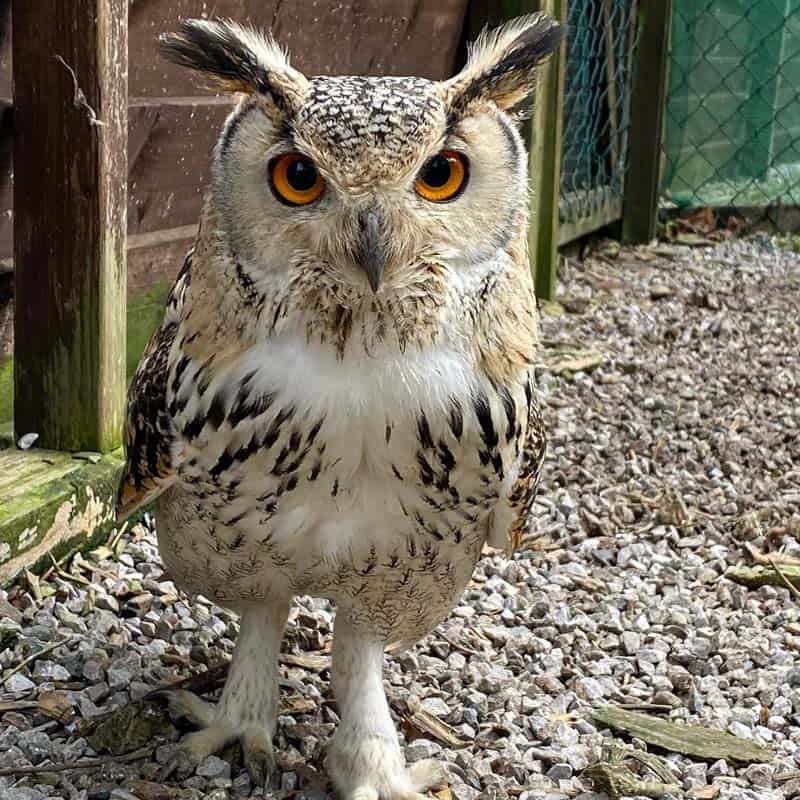
Rock Eagle Owl
If intruders approach a nest with chicks the parents will often resort to diversionary tactics such as feigning a wing injury. In aggression both males and females will hiss menacingly, fluffing their plumage and spreading their wings, a posture displayed by many owls in such situations.
They will primarily take food such as field rats and mice but can take birds up to the size of peafowl. Reptiles, frogs, crabs and large insects also provide an element to their diverse diet. They mainly hunt from a perch sometimes in a low foraging flight a little like the Barn Owl.
This owl has been considered by many specialists to be a subspecies of the Eurasian Eagle Owl and observations of both species have therefore been merged. The Rock Eagle Owl is specifically distinct from the very similar but larger Eagle Owls whose subspecies turcomanus overlaps in range and lives with it sympatrically in Kashmir.
The Rock Eagle Owl is also known as the Bengal Eagle Owl and the Indian Eagle Owl.
Latin Name: Bubo bengalensis
Length: 500-560mm
Wingspan: 1450-1700mm
Weight: 1100-2000g
Conservation Status: Uncertain but not uncommon in suitable habitats.

Rocky hills with bushes, steep earth banks, a wooded country with ravines and old mango orchards in the neighbourhood of human settlements. Lowlands up to 2,400m.

Get Involved
You can visit our Rock Eagle Owls at The Owls Trust. Why not view our Adopt an Owl Page where you will find how to help The Owls Trust and adopt Baldrick one of our Rock Eagle Owls if you wish to be involved with their care.