Snowy Owl Facts
Snowy Owl
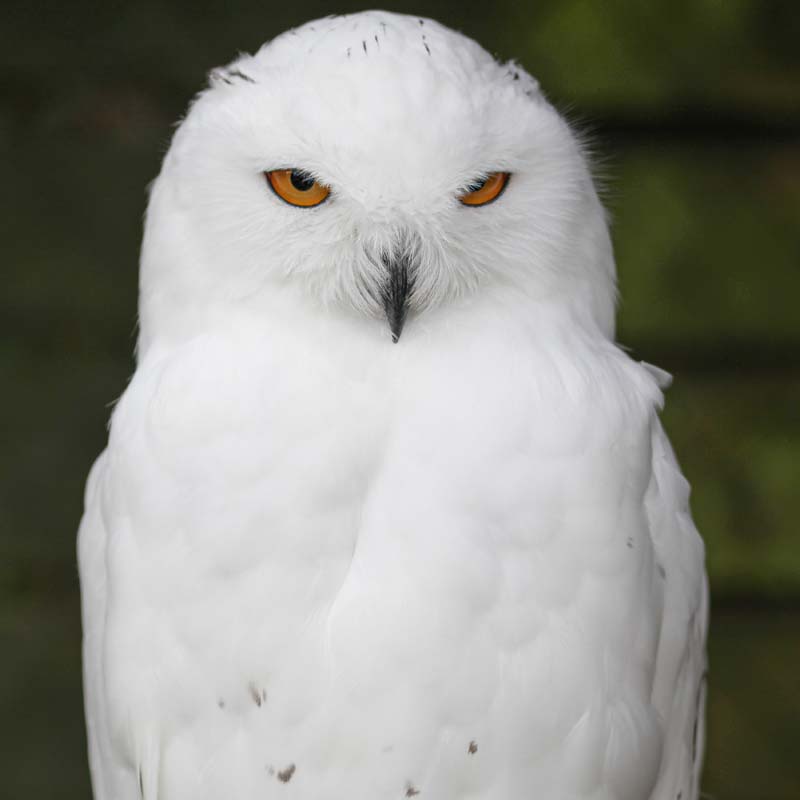
This owl cannot be confused with another owl because of its large body size, comparatively small head and beautiful white plumage with dark speckles. Males are less marked than females, some may even be pure white.
The Snowy Owl enjoys a varied diet often dependent on local prey availability. It takes lemming, rabbit, shrews and voles, birds which can include geese, grouse and seabirds and other birds of prey. Unusually for an owl, the Snowy will also eat carrion.
The last record of Snowy Owls breeding in the UK was in 1967 on the island of Fetlar in the Shetlands but this success only lasted until 1975 when the male disappeared leaving only a few females.
Vagrant Snowy Owls do occasionally turn up in various parts of northern Scotland and have been sighted as far south as Lincolnshire.
The Snowy’s dense plumage, with feathers extending down to its toes, and its great bulk and compact shape, enable it to survive extremely low temperatures. The average winter temperature in the arctic tundra is -34°C!
Latin Name: Nyctea scandiaca
Length: 530-660mm
Wingspan: 1420-1660mm
Weight: 1100-2000g
Conservation Status: In “lemming years” may be locally abundant. In other years may be entirely absent from the same locality and do not breed.

Arctic Tundra. Visitors to Britain favour mountains and moorland with short vegetation.

Get Involved
You can visit our Snowy Owls at The Owls Trust. Why not view our Adopt an Owl Page where you will find how to help The Owls Trust and adopt Wyddfa one of our Snowy Owls if you wish to be involved with their care.